


How Nvidia boss went from political nobody to Trump’s dinner date with King
How Nvidia boss went from political nobody to Trump’s dinner date with King

Iona CleaveTue, November 10, 2026 at 6:00 AM UTC
0
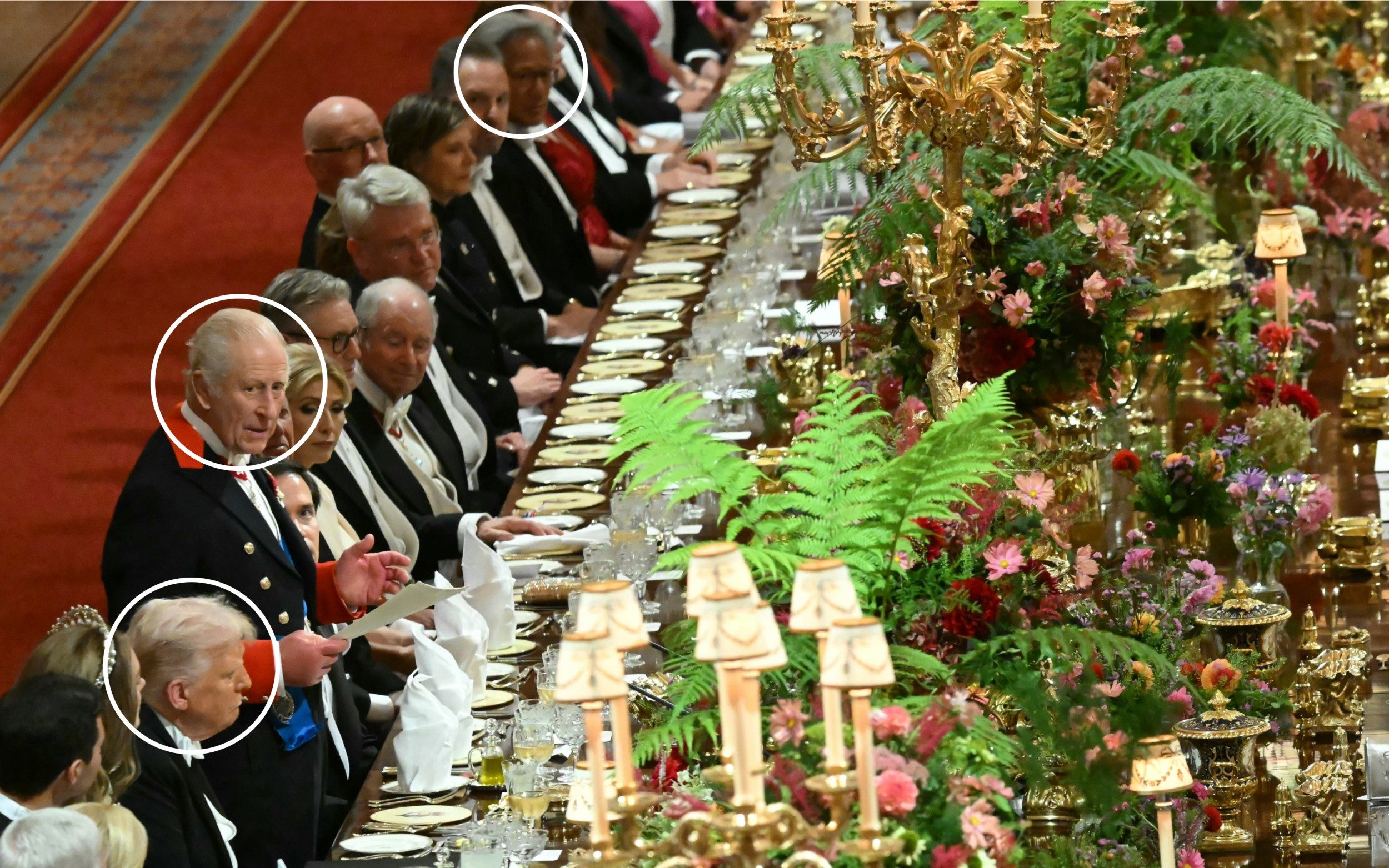
Mr Huang (top) joined Donald Trump on the US state visit to the UK, dining with the King at a state banquet at Windsor Castle - Getty Images
Donald Trump had never heard of the man at the helm of the global AI boom before he was reelected to the White House.
“What’s his name?... What the hell is Nvidia? I’ve never heard of it before,” the US president admitted to asking his advisers.
He regaled an audience with this anecdote in July 2025 whilst unveiling his administration’s new “AI Action Plan”. Telling Jensen Huang to stand up, he gushed: “What a job you’ve done, man.”
The moment showed how seamlessly Mr Huang had integrated into the White House in just six months, shapeshifting from a stranger to the Republican president to a close confidant with whom he exchanged ideas in private meetings and late-night phone calls.
So close had their relationship become that Mr Huang was invited to accompany Mr Trump on trips to the United Arab Emirates, Saudi Arabia and the UK, where they dined with the King. In May, he was part of Mr Trump’s delegation to China.
That relationship is now under a magnifying glass following the revelation that Mr Huang reportedly had an affair with a suspected Chinese spy.
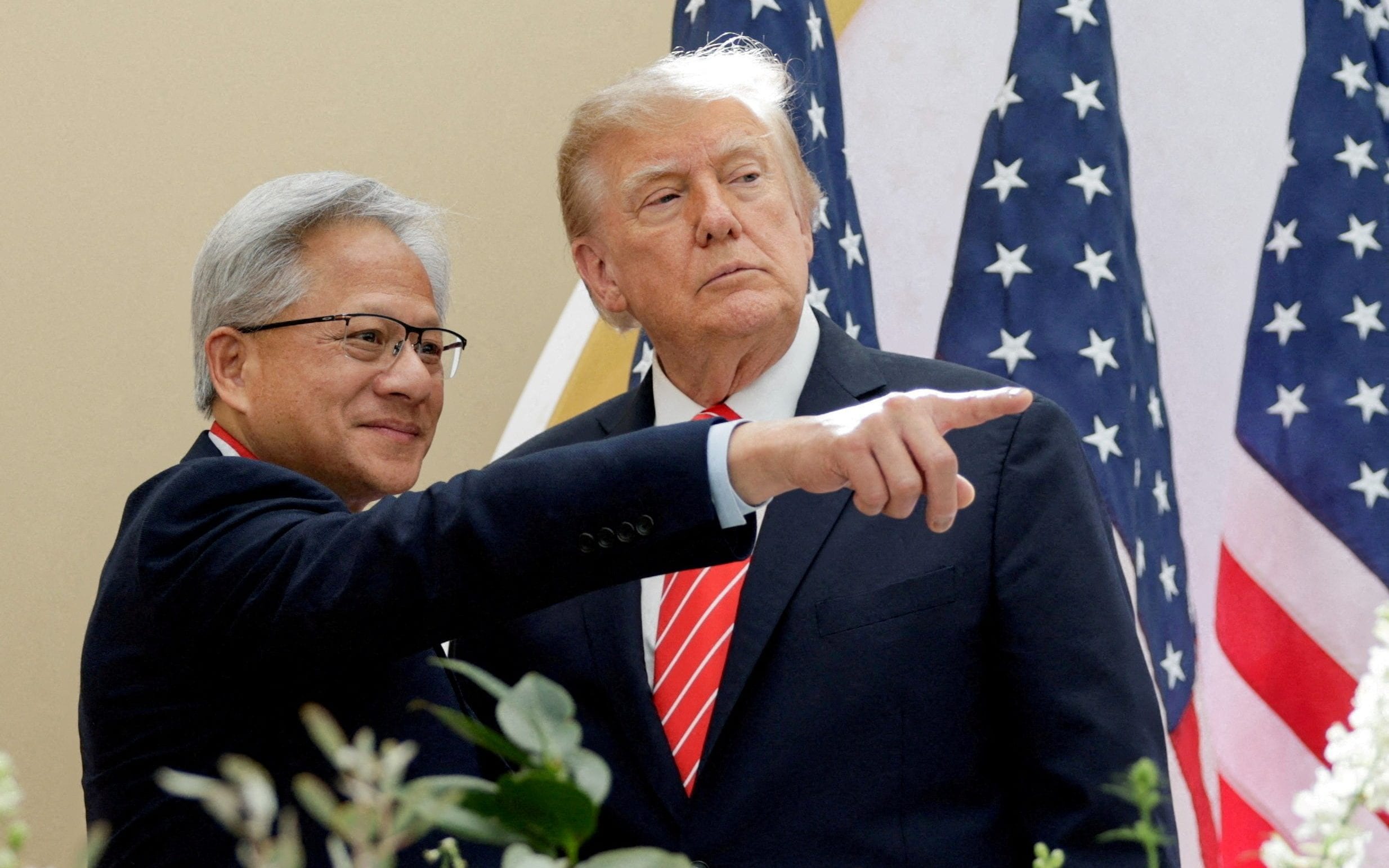
Mr Trump admitted he had never heard of the chip maker or its chief before his re-election – within months they were exchanging late-night phone calls - Reuters/Evan Vucci
The tech titan has helped the president to leverage chip sales to secure political and economic deals. At home, Mr Huang helped craft Mr Trump’s policy on AI, lobbied to increase exports to China and allegedly derailed a plan to rein in powerful AI systems.
All the while, US investigators believe, the Nvidia boss was the victim of a honeytrap by Alice Huang, who was allegedly recruited by a Beijing agency to spy on him.
It raises the uncomfortable question of whether Mr Huang’s persistent lobbying of the US government to expand access to China was influenced by his relationship with the alleged spy.
Tracy Walder, a former CIA officer and FBI special agent, said that, from a business perspective, it made obvious sense Mr Huang would want to sell to the vast Chinese market. But from a national security perspective, it cannot be ignored that “Alice Huang may have persuaded him to go harder with Trump on that”.
The New York Times reported at the end of October that Mr Trump was briefed on the intelligence findings roughly a year ago but chose not to do anything with the information.
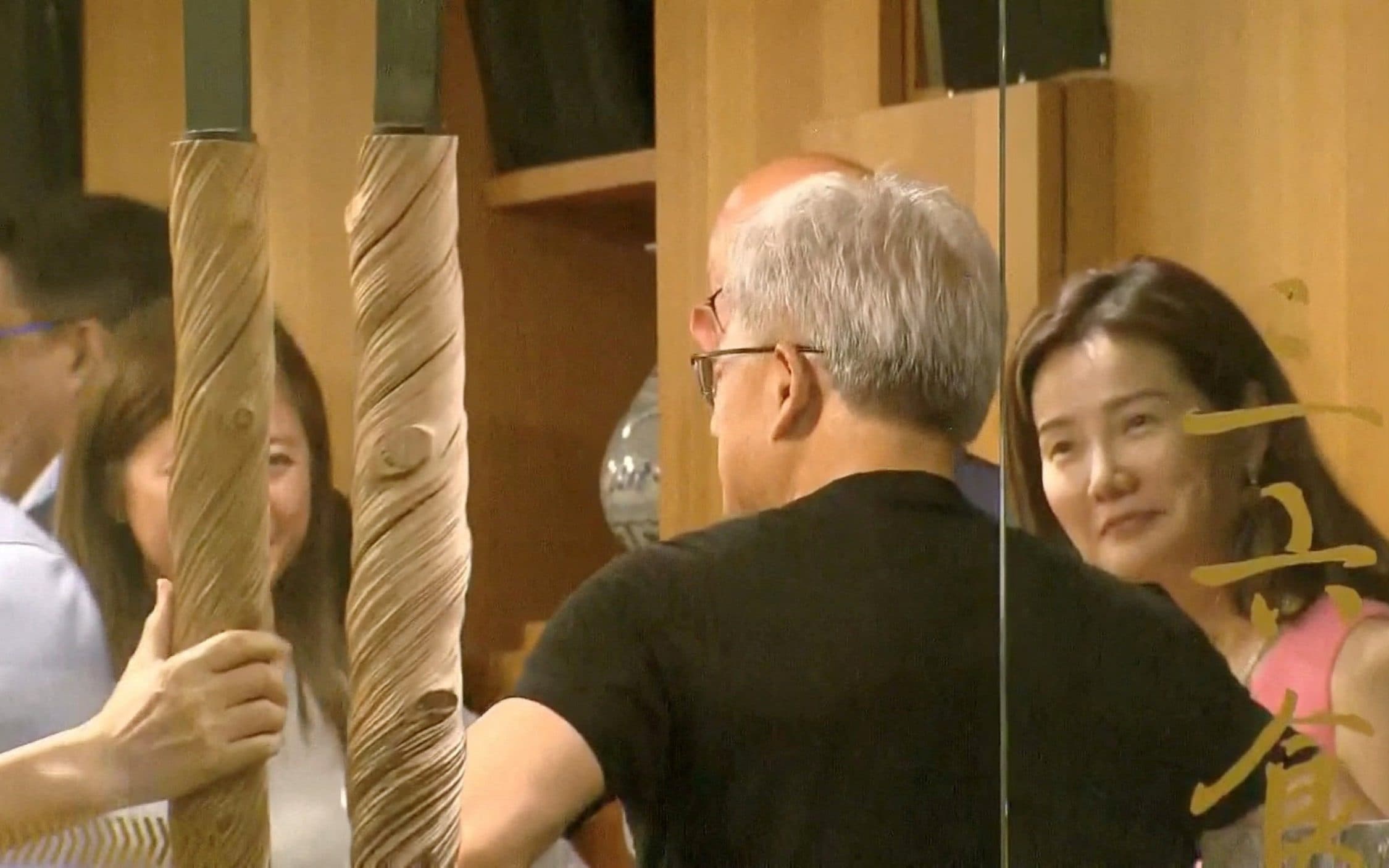
Jensen Huang photographed with Alice Huang in Taiwan in May 2025 - Reuters
In the race for AI domination, Washington has remained on high alert to the possibility that Nvidia’s most advanced technology could help China gain the upper hand.
Mr Huang is now under investigation by the $4.5tn (£3.35tn) chip maker he co-founded in 1993 that controls an estimated 90 per cent of the market for the chips used in the large AI projects powering the US economy.
After skipping Mr Trump’s inauguration, Mr Huang and the president got off to a tepid start. According to reports, their first meeting at the Oval Office amounted to little.
However, Mr Huang credited Howard Lutnick, the US commerce secretary, for providing him with early access to the president, telling him: “Whenever you need access to the president, the administration, you call us,” Mr Huang boasted on Joe Rogan’s podcast in December 2025. “And it was completely true . . . they [were] always available.”
The pair began speaking on the phone, with Mr Huang revealing Mr Trump was prone to calling him late at night.
By April 2025, Mr Huang was trying to persuade Mr Trump to undo his restrictions on the sale of Nvidia’s H20 chips to China, which were part of the White House’s wider trade conflict with Beijing.
He flew to speak directly with the president while he hosted a $1m-a-head donor dinner at Mar-a-Lago in early April. On April 14, Nvidia committed to $500bn in AI manufacturing in the US.
Advertisement
Days later, Mr Huang was invited to accompany Mr Trump on the first international trip of his second term to the Middle East. During the May 2025 trip, Mr Huang helped broker more than $200bn in chip sales to Saudi Arabia and the United Arab Emirates.
That same month, the tech chief hosted Alice Huang – who US intelligence believes is a Chinese spy – at a dinner in Taipei. It is not known where the pair first met, but evidence of their professional relationship dates back to June 2024 when they were photographed leaving in the same car.
By July, Mr Trump launched his administration’s AI blueprint that focused on accelerating domestic capabilities by cutting regulation and fast-tracking data centre construction – aligning with what Silicon Valley leaders lobbied for. He singled out Mr Huang for praise over the move.
A month later, The New York Times reported that Mr Trump and Mr Huang had agreed that the US government would take a cut of Nvidia’s chip sales to China.
In September 2025, Mr Huang was part of the US state visit to the UK. He dined with the King at a banquet at Windsor Castle that brought together major tech giants with British officials to discuss AI and US-UK cooperation.
Afterwards, Mr Huang publicly pressed the Trump administration to allow Nvidia’s next-generation chips, known as Blackwell, to be sold to China. Following strong opposition from inside the administration, the request was rejected.
However, in December the White House allowed the export of H200 chips – Nvidia’s second-best chips – to the Chinese market, with the US taking a 25 per cent cut.
On Capitol Hill, there was bipartisan pushback that the move posed a major national security and economic risk. “At the end of the day, it was a meeting between [Huang] and the president,” a person with knowledge of the decision told the Financial Times. “That’s how this came about.”
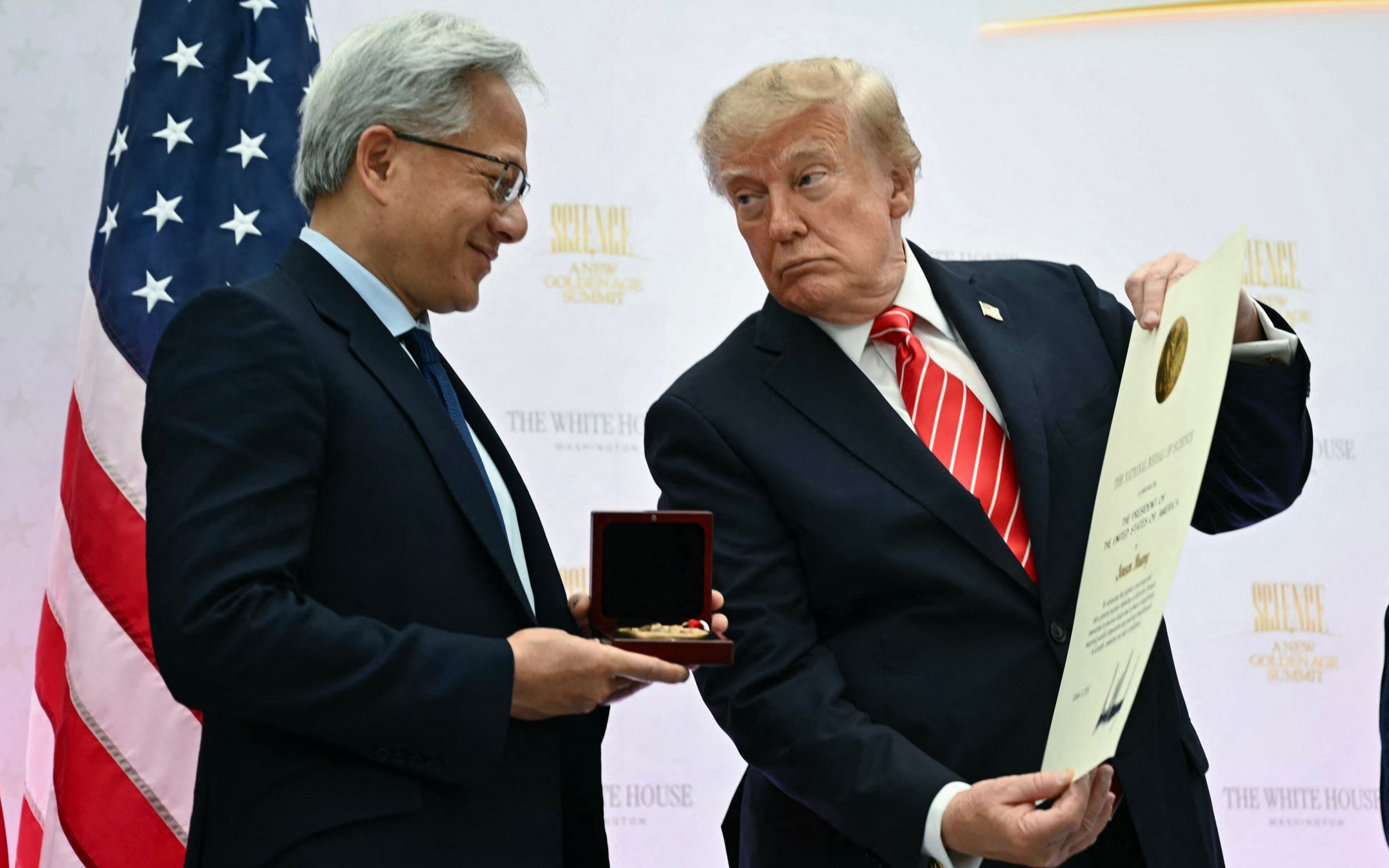
President Trump presented Mr Huang with the National Medal of Science at the Golden Age of American Innovation Summit on October 8 - Getty Images/Kent Nishimura
In January, Mr Trump purchased up to $1m in Nvidia stock, according to financial disclosure filings. Roughly a week later, the US government approved the transfers of the company’s chips to Chinese buyers.
In February, Mr Trump purchased a larger block of Nvidia stock valued between $1m and $5m. Critics and politicians raised conflict-of-interest concerns, given the personal trader’s proximity to US policy developments. White House officials defended the trades, saying that Mr Trump’s assets are in a trust managed independently by family members.
Furthering conflict and ethics concerns, Nvidia also donated $25m to the president’s White House ballroom project – one of his flagship legacy agenda items, the Washington Post revealed last month.
By this spring, a classified memo – crafted by Marco Rubio, the US secretary of state – was circulated among administration officials naming Ms Huang as a spy for Beijing.
Yet, despite Mr Huang’s alleged relationship with the accused spy, Mr Trump insisted on him joining a critical US-China mission in May. When he was left off the delegation list by aides, Mr Trump diverted Air Force One to pick him up in Alaska and take him to Beijing.
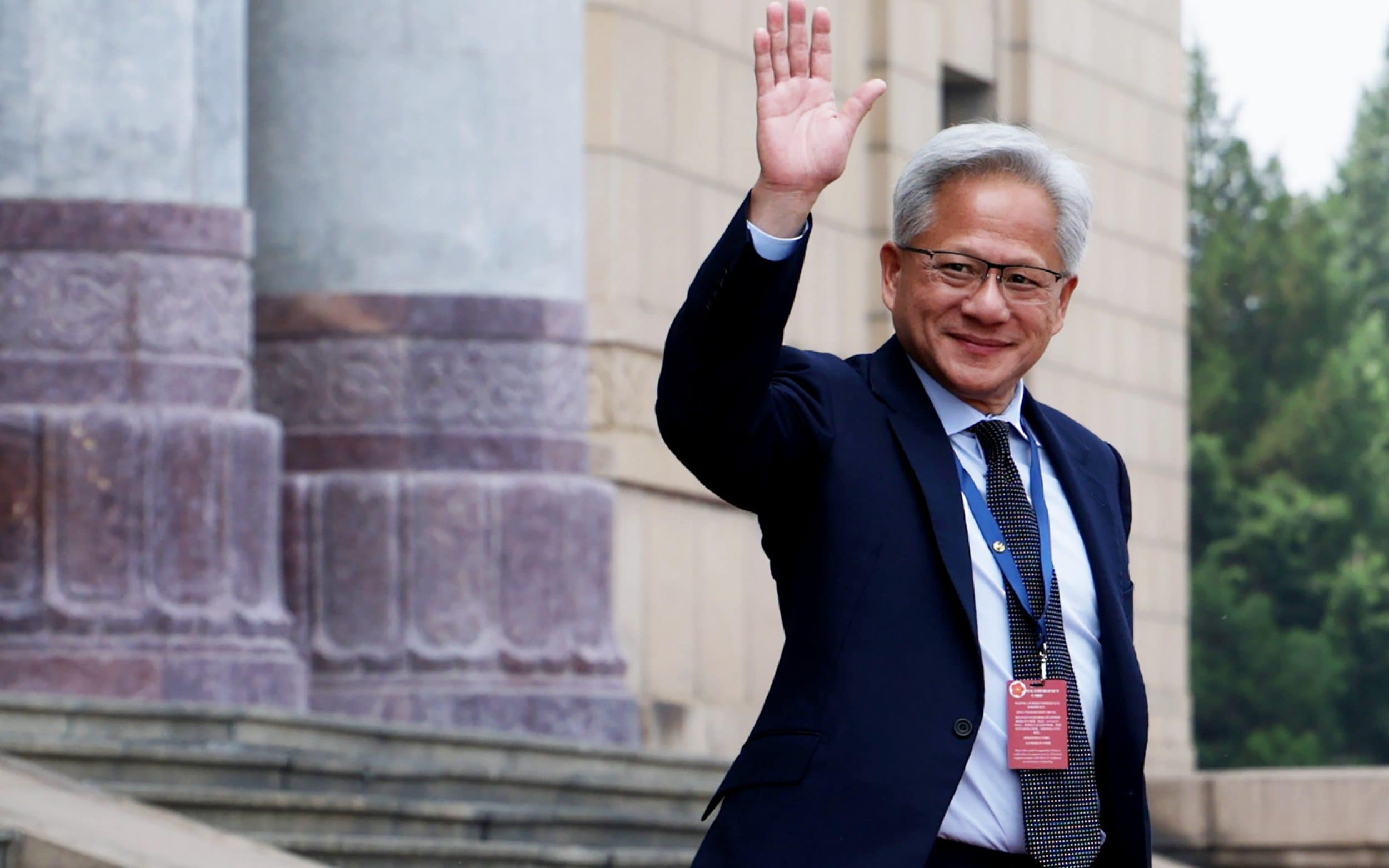
Jensen Huang joined Donald Trump’s delegation to China in May - Getty Images/Alex Wong
Despite the terrible week for Mr Huang, Mr Trump is standing by his AI man. He defended Mr Huang as an “honourable guy” on Sunday, saying he would still consider taking him on his upcoming Asia trip.
“This is very problematic,” said Jonathan Hackett, a former American counter-intelligence agent. “The question now is: was Huang able to influence US policy to allow China to get access to advanced [chips] to compete with or surpass the US in the AI race?”
The concerns don’t stop there, he added. “Huang may have been the largest target at Nvidia, but what about those that we don’t know about? It is in China’s interest to target this company at all levels.”
As for Mr Trump, Mr Hackett said, it was in both his and the US’s interest to keep Mr Huang close. “This is the most important person in AI which is arguably the biggest issue in the world right now. It is very important the [White House] does not ostracise him as they risk pushing him closer to China.”
The Telegraph has contacted Mr Huang, Nvidia and the White House for comment.
Source: “AOL Money”
